
Why Staying Grounded Matters More Than Predictions
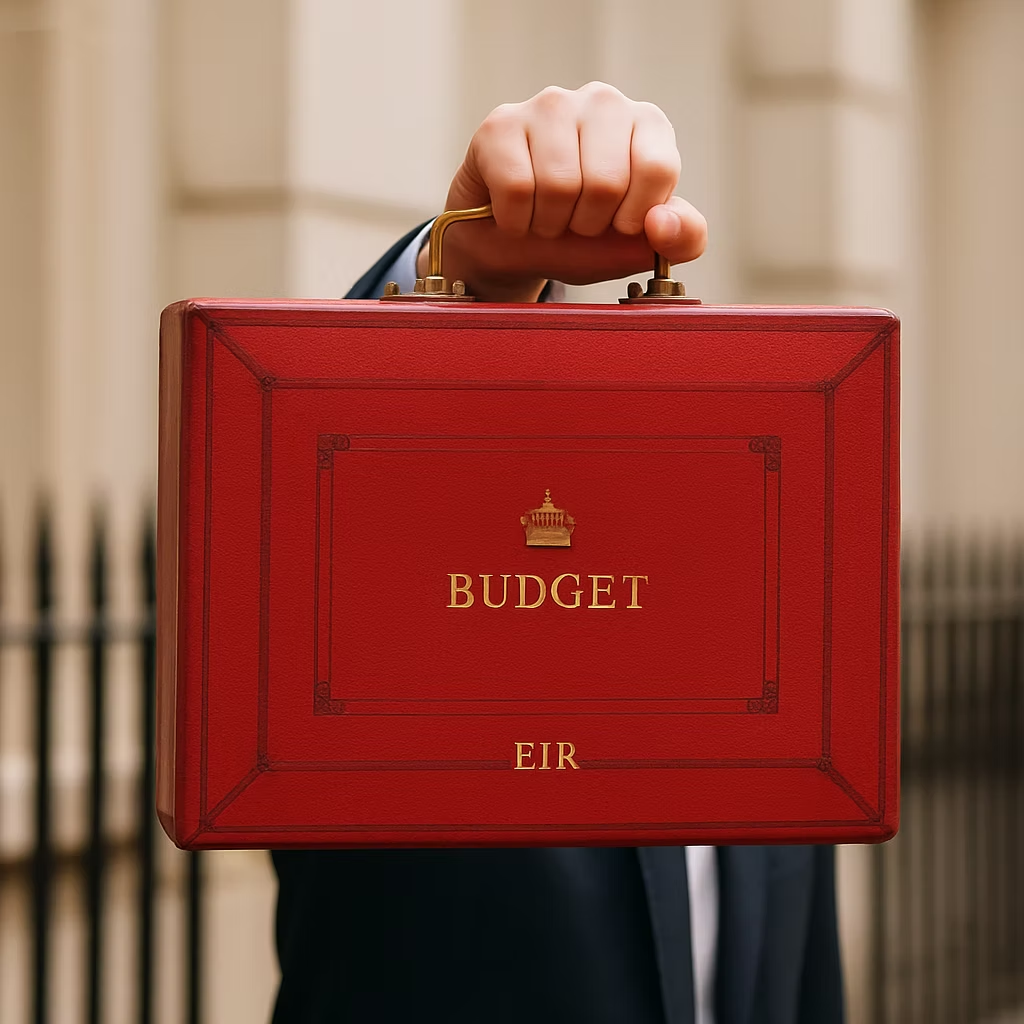
Every year, as Budget season approaches, the same pattern emerges…
Newspaper headlines heat up.
Social media fills with alarm bells.
Commentators make bold claims about what might happen.
And suddenly, everyone feels they should be making financial moves before the sky falls in.
It’s a bit like hearing a distant rumour that the weather might be dreadful next weekend, then cancelling your holiday, buying a new coat, and repainting the house, just in case.
At TFP, we think there’s a better way.
Instead of reacting to noise, we encourage clients to stay anchored to what actually matters: facts, timelines, and thoughtful planning rooted in your real life.
Budget speculation is nothing new. But there’s a clear pattern we’ve observed year after year, and understanding it can save both money and peace of mind.
When Predictions Become Panic
The run-up to any Budget tends to take on a life of its own. Suddenly:
- one article hints at changes to pensions,
- another forecasts sweeping adjustments to property taxes,
- a radio segment warns about looming tax hikes,
- and a guest on breakfast TV declares, “This could be the biggest shift in decades.”
The challenge isn’t that people talk about possibilities… it’s that speculation often gets presented as inevitability.
For clients, this can feel unsettling.Should I act now? Should I restructure things? Am I going to miss out if I don’t do something immediately?
But reacting to rumours is a bit like setting off on a journey based on an unconfirmed SatNav instruction:you’re more likely to end up lost than ahead.
What Last Year Taught Us (Without Repeating Any Details)
We had this conversation with many clients last year. The tone was similar: big claims, big guesses, big predictions.
And what happened?
Some expected changes never materialised. Others appeared in a completely different form. And a few meaningful decisions emerged from angles nobody predicted.
This happens every year.
It highlights something we remind clients of constantly: speculation rarely aligns neatly with reality.
When people hold back or rush decisions based on rumours, they’re betting against the unknown. And betting against the unknown is rarely part of a good financial plan.
Why Waiting for Facts Isn’t Passive – It’s Strategic
“Wait and see” might sound like doing nothing.In reality, it’s the opposite.
When we ask clients to wait for official announcements, we’re choosing:
- clarity over conjecture
- information over anxiety
- and stability over knee-jerk reactions
Financial planning works best when decisions are made with complete, verified information, especially when those decisions affect your long-term wellbeing, tax position, or ability to achieve your goals.
Acting early can be sensible when you have actual policy details. Acting early based on headlines rarely is.
So What Can You Do Now? Plenty.
Waiting for facts doesn’t mean waiting idly.
Here are the areas where it absolutely is worth taking action today:
1. Make sure all your existing allowances are being used properly
Tax years are short. Opportunities vanish quickly if ignored.
2. Sense-check your longer-term plans
If life goals have shifted (retirement, work patterns, family needs) now is a great time to revisit the bigger picture.
3. Review investment positioning against your time horizons
We do this regularly at TFP: ensuring money that needs to be accessible stays accessible, and long-term money remains invested appropriately.
4. Keep communication open
If a headline rattles you, or if a rumour makes you wonder whether you “should be doing something,” just ask. That’s what we’re here for.
These are actions rooted in clarity and control, the opposite of reactive planning.