
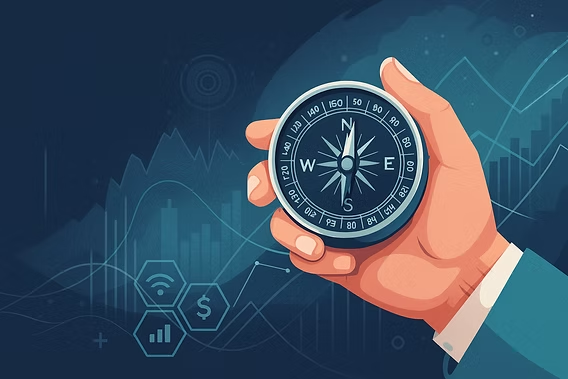
If you’ve invested for more than five minutes, you’ve already learned one universal truth: there is always something trying to pull your attention away from your long-term plan.
Sometimes it’s fear, unnerving headlines, political uncertainty, or a sudden market wobble that makes even the calmest investor wonder if this is “the big one”.
Other times it’s excitement, the latest technology, industry, or trend that everyone suddenly seems to be talking about. It’s the playground effect for grown-ups: nobody wants to be the only one not joining in.
These swings between anxiety and enthusiasm are perfectly human. But they can quietly threaten even the best thought-through financial plans. At TFP, our work often involves helping clients tune out the noise so they can stay focused on what actually moves them closer to financial independence.
Let’s explore how to do that.
Your Brain Loves a Distraction (And That’s OK)
From an evolutionary perspective, our minds were designed to pay attention to sudden changes. A rustle in the bushes might have been dinner, or danger. We’re wired to look up, take notice, and react.
Modern investing plays directly into this instinct.
- A sharp fall in markets?Your brain demands you “do something”.
- A trending sector that everyone claims will change the world?Your brain whispers: “Don’t miss out.”
Neither of these reactions is irrational, they’re just not helpful when your financial success is measured in decades, not days.
Understanding this is the first step towards freeing yourself from the short-term emotional rollercoaster.
When Excitement Turns Into a Detour
Let’s imagine you’re on a long walk. It’s a bright day, your route is mapped out, and you’re making steady progress.
Then you see a shiny sign pointing to a scenic shortcut.
Do you take it?
Sometimes it might genuinely improve the journey. But most shortcuts:
- aren’t actually shorter
- lead you somewhere unexpected
- or loop you back to where you started
In investing, hype cycles behave much the same way.
A promising sector takes off. A new technology is plastered across newspapers. Friends and colleagues start comparing returns. Social media becomes a highlight reel of overnight wins.
And because nobody wants to feel left behind, money gets diverted from long-term, low-drama portfolios into something untested, concentrated, or overly fashionable.
It’s rarely deliberate. It’s almost always emotional. And it can take years to unwind.
When Fear Becomes the Only Voice You Hear
Just as excitement can lure us off-course, fear can freeze us there.
Periods of uncertainty, whether economic, political, or global, often create a fog around even the most rational investor. In that fog, we see:
- temporary declines as permanent threats
- normal volatility as structural change
- noise as insight
Many people don’t abandon their plan because they think it’s wrong; they abandon it because the emotional discomfort becomes too strong.
At TFP, our role in those moments isn’t only to advise, it’s to anchor.
To remind you what your plan was built to withstand.To keep you grounded when the world feels shaky. To help you pause before acting on a feeling that could cost your future self dearly.
The Hidden Cost of Chasing Today’s Headlines
Trends come and go. Technologies rise and fall. The companies that look “unstoppable” today often become considerably less shiny just a few years later.
Meanwhile, the investments that quietly compound in the background, the ones that look boring, predictable, and sometimes “not exciting enough”, continue doing what they’ve always done: deliver sustainable long-term growth.
Hyper-focused investing, whether driven by fear or enthusiasm, tends to share three uncomfortable patterns:
- It increases risk without increasing expected reward.
- It reduces diversification, even when the investor thinks it’s doing the opposite.
- It creates unnecessary emotional stress, making it harder to stick to a strategy.
And over decades, the timeframe that actually matters, those detours add up.
A More Helpful Question to Ask
When clients feel the pull toward whatever is trending, we don’t lecture them. We simply ask:
“Will this decision make your plan easier or harder to sustain long term?”
Because wealth isn’t built by achieving the highest possible return.It’s built by achieving good returns, consistently, calmly, and for as long as possible.
A diversified portfolio, grounded in evidence, is designed to withstand fashions, fads, innovations, and panics. It doesn’t require a perfect prediction record. It only requires discipline, patience, and a willingness to trust the process.
Trends will come and go whether you participate or not. Your financial plan shouldn’t be rewritten every time.
How TFP Helps You Stay Focused
Our job isn’t to chase the latest opportunity for you.
Our job is to:
- help you stay anchored to the purpose behind your investments
- bring clarity during noisy periods
- provide perspective when the world feels unpredictable
- act as a second pair of eyes when emotions run high
- protect your long-term independence
In your regular reviews, we revisit not only the numbers but the story, your goals, values, fears, aspirations, and the life you’re building. That context keeps the distractions in their place: interesting, perhaps… but not decisive.
If you’re ever unsure, overwhelmed, or tempted to veer off-course, reach out. A 10-minute conversation can often save a 10-year regret.